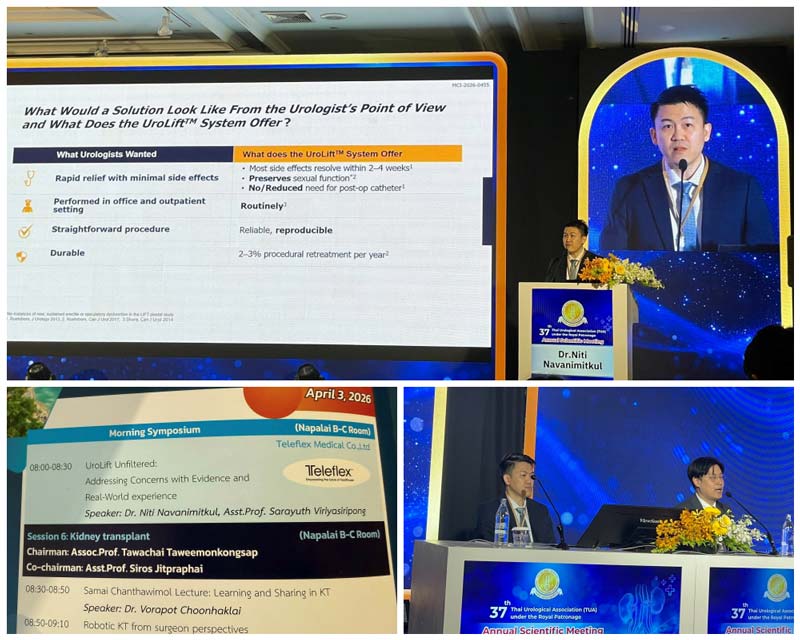
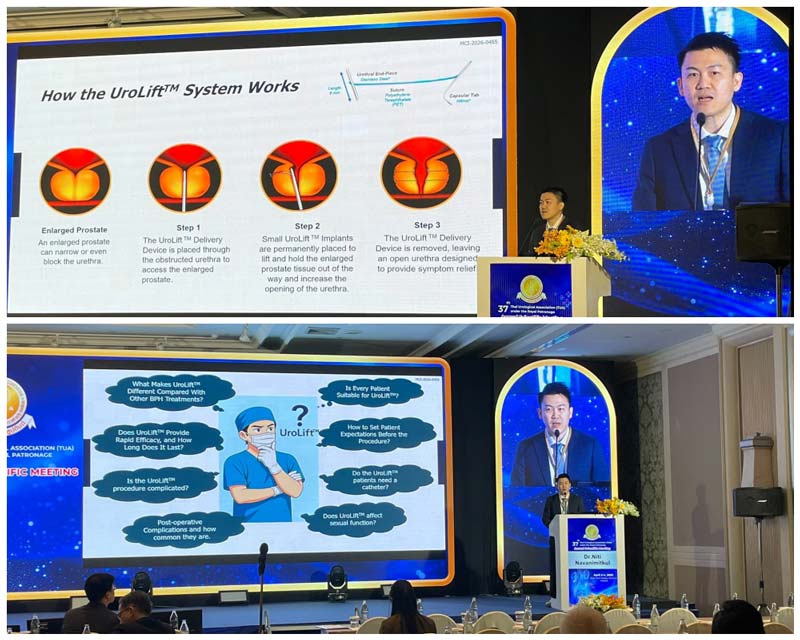
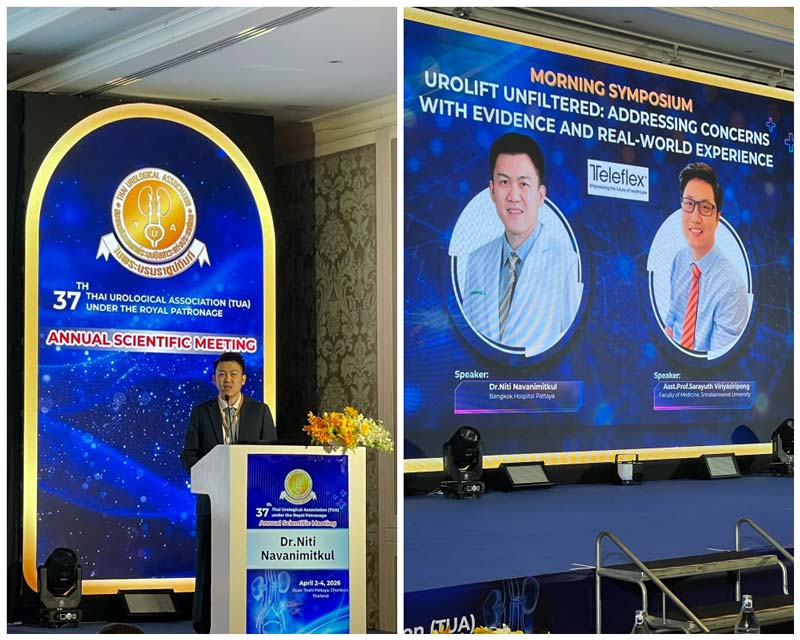
We would like to express our sincere appreciation to the Thai Urological Association (TUA) for the invaluable opportunity to contribute to a national academic platform. It was an honor to be invited as a speaker at the 37th Thai Urological Association Annual Scientific Meeting, held from April 2–4, 2026, at Dusit Thani Pattaya.
This prestigious annual urology conference brings together leading urologists, surgeons, and healthcare professionals from across Thailand to exchange knowledge, discuss advancements, and explore innovations in the field of urological surgery and men’s health.
The presented topic,
“UroLift Unfiltered: Addressing Concerns with Evidence and Real-World Experience,”
focused on providing an in-depth, evidence-based perspective on the management of Benign Prostatic Hyperplasia (BPH), a highly prevalent condition among aging men that significantly impacts quality of life through lower urinary tract symptoms (LUTS), including urinary frequency, urgency, nocturia, and incomplete bladder emptying.
A key highlight of the session was the discussion of the UroLift System, an innovative minimally invasive treatment for enlarged prostate that relieves urethral obstruction without the need for tissue resection. This approach offers several clinical advantages, including rapid recovery, preservation of sexual function, and reduced risk of complications compared to traditional surgical procedures.
Importantly, the session extended beyond theoretical research and clinical trials by integrating real-world clinical experience in treating patients with BPH. This practical perspective provides valuable insights into patient outcomes, procedural effectiveness, and treatment selection in everyday clinical practice, particularly within the Thai patient population.
The primary objective of this presentation was to support physicians and healthcare providers with comprehensive, up-to-date information to guide clinical decision-making. Furthermore, it aims to enhance awareness of advanced treatment options for prostate enlargement and promote improved standards of care in men’s urological health.